Review: Forestry on the Great Plains

The Green New Deal. Love it. Hate it. Either way, it is certainly not the first of its kind.

“Forestry on the Great Plains, 1902-1942,” written by Professor R. Douglas Hurt, details the development of something you probably never learned about in history class: trees in Kansas. You might know there aren’t many of them, but not why. You, like one Texan, might think that “if [God] had wanted a forest on the wind-scoured prairies of Nebraska and Kansas, He would have put it there.”

But some policymakers disagreed. Indeed, Professor Hurt details the development of Great Plains forestry, in Nebraska and Kansas especially, in the late 19th and early 20th centuries. He began in Nebraska, in the Sand Hills (a logical-sounding place to plant a tree) with Charles Bessey.

Bessey convinced the USDA to start a trial project aimed at planting trees in the Great Plains. Despite its failure, President Teddy Roosevelt and USDA official Gifford Pinchot tried again, ten years later, to “improve soil humus,” “store water for irrigation,” and “ameliorate the dryness of the atmosphere.” This resulted in the Nebraska National Forest–an almost-oxymoronic federal creation– that once stood at almost 350,000 acres. Now, it is down to 140,000.

But these trees didn’t grow legs and walk to Nebraska. Instead, they were planted, one by one. Professor Hurt describes the numerous attempts the USDA and others made at planting forests. Many of these attempts met fire, drought, or regulatory hurdles. For example, droughts stymied the the Teddy Roosevelt’s Kansas National Forest, causing Woodrow Wilson to abolish it in 1915.

Professor Hurt ends his essay with the centerpiece of Midwestern tree planting: the Shelterbelt Project. Sold as a way to reduce soil erosion, this project planned to plant hundreds of miles of trees, from the Canadian border, through the Dakotas, and south into Texas. Despite numerous revisions, it eventually succeeded in planting 220 million trees. The Shelterbelt Project died, shortly after the onset of World War Two, in 1943.

As I read Professor Hurt’s narrative, I met details, details, and more details. He has taught Agricultural History (yes, that’s a thing), and it shows. These details, however, accurately painted a picture of the growth of federal intervention in agriculture policy. Several times, Professor Hurt outlines the salesmanship bureaucrats used to implement their plans. One USDA official stated that shelterbelts wood “modify temperature, humidity, and wind velocity on portions of the adjoining farms.” And, in fact, these trees did protect some crops from the sweltering Midwestern winds.

Professor Hurt’s story documented the rise and fall of Midwestern tree planting. But it also subtly discussed the role of science in decision making. While earlier generations of scientists believed trees caused rainfall, USDA forestry officials fought against this myth as they rallied public support in the 30s.

Apart from the story, Professor Hurt made a few grammatical errors. I’ve pointed out some typos, and added brackets when necessary:

“It was [a] national forest of 208,902 acres, mostly without trees.”

“Pinchot and President Theodore Roosevelt agreed that the creation of a forest would [not only] instrumentally improve the environment by conserving the soil, but [or and] it would also help control the environment…”

“Faced with this catastrophe, the Forest Service decided to replant only the areas where tree growth proved most favorable, which involved [–, delete “which involved”] about 48 percent of the burned area.”

As a narrative, this essay was not the most pleasant to read. It was dotted with detail, speckled with specifics, and carpeted with county names. These, however, also went to prove the commitment that several USDA foresters, U.S. Presidents, and (some) locals had to those projects.

You can read the full text of “Forestry on the Great Plains, 1902-1945” here: http://www-personal.k-state.edu/~jsherow/hurt2.htm.
The Army of the Potomac

The Army of the Potomac was the main fighting force of the Union army in the Civil War. It was the army that forced General Robert E. Lee to surrender at Appomattox in 1865.

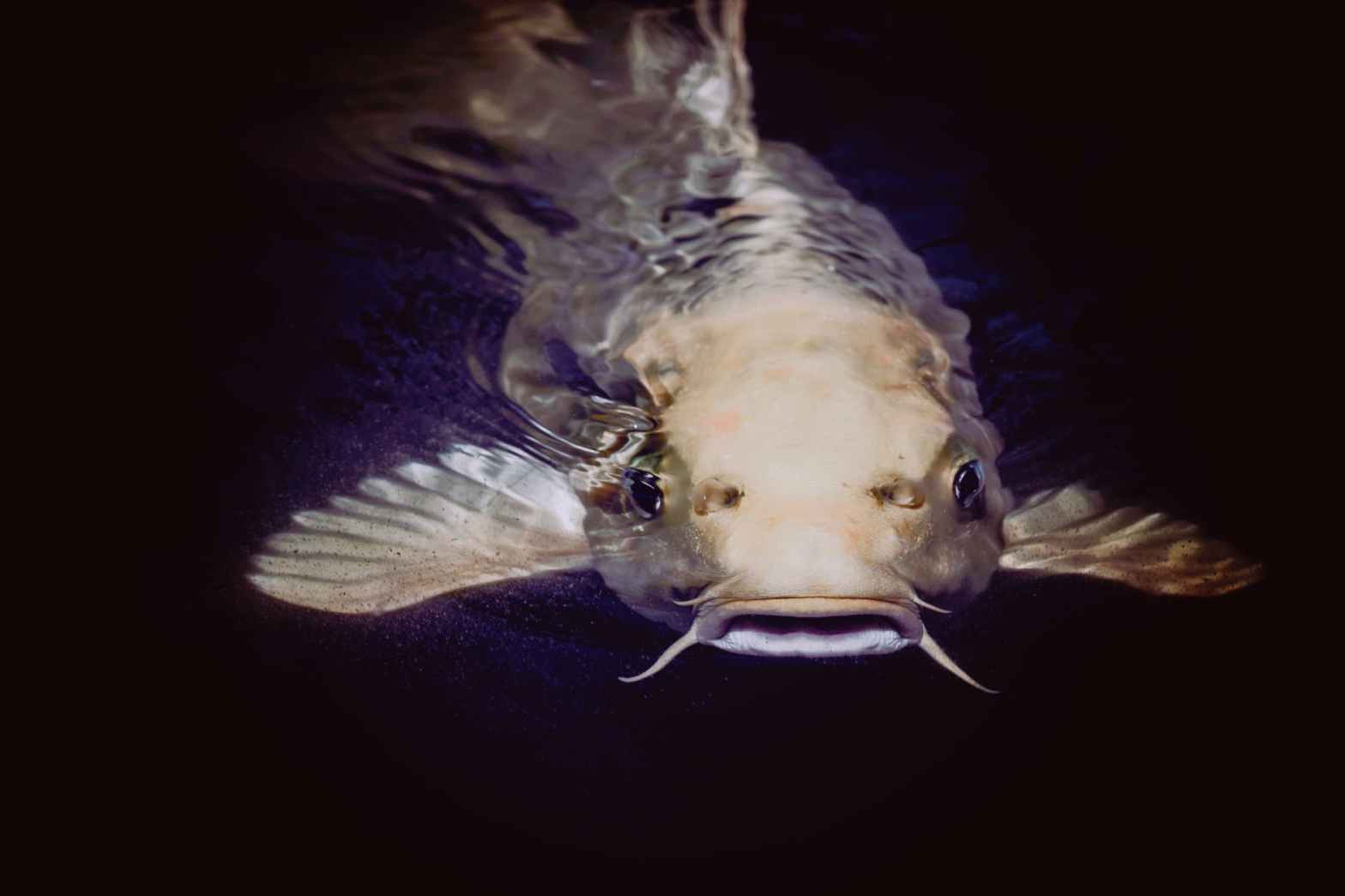
While that army is dead and gone, its efforts relegated to history textbooks and war memorials, a new blue-colored army now wages war in and around the Potomac River: The blue catfish.

Much like the Rebel army of the CSA, however, these blue catfish are invaders from the South who are determined to put those who fight them into a “perilous” situation, pitting catfish against catfish, business against business, and senator against senator.

True, these catfish are not armed with grapeshot and bayonets, but their ravaging has not left the Potomac or the people around it unscathed.

For starters, blue catfish don’t belong in the Potomac River. They were introduced in the 1970s for sports fishing. But their numbers grew and a 2015 estimate pegged their numbers at upwards of 100 million.

Much like Sherman’s March to the Sea–where his men laid waste the Atlantic countryside–these blue invaders are a bane to the Potomac’s ecosystem. A 2011 review stated that “blue catfish in these systems are apex predators that feed extensively on important fishery resources.”

The National Oceanic and Atmospheric Administration (NOAA) confirmed this: “Left unchecked, they [blue catfish] threaten native species, including endangered and commercially important species.”

Thus, the Virginians fought back. The fish were already entrenched in the river, making removal impossible, so they did the next best thing: Eat them.

Logical, right? Local restaurants seemed to think so. Around 200 Chesapeake-area restaurants and several retail lines like Whole Foods started selling blue cat.

But like most victories, this victory against the catfish was not assured.

Confederate General Stonewall Jackson’s death was caused by his own men. Similarly, the Chesapeake citizens dedicated to fighting the Southern blues were needlessly hindered by an indirect and almost certainly unintended attack from our very own federal government.

To make a long story short, annoyed Southern catfish farmers and their lackeys in Congress passed a law in 2008 that changed food safety regulations for catfish. These Southern farmers were being out-competed by Vietnamese catfish farmers, so Congress moved authority for regulating catfish from the FDA (who regulates all other types of seafood) to the USDA (who had never regulated seafood before then).

But the USDA’s “stricter” standards were the equivalent of friendly fire. One Chesapeake-area seafood processor complained that “It [the USDA inspection program] has become a choke point. It actually limits what we can produce.”

Other industry members echoed that concern. Even the Governor of Maryland sent a letter to the USDA asking for relief. In a joint press release, Virginia’s Senators said that the switch “undermines Virginia’s efforts to employ market-based solutions to reduce the population of blue catfish…”

Thus, much like the beginning of the Civil War–when people thought it would be a short affair and even picnicked before battles–the battle against the second Army of the Potomac met unexpected troubles. For the sake of the river, its resources, and the residents around it, let’s hope that this time the blue army surrounding DC isn’t the one that comes out on top.

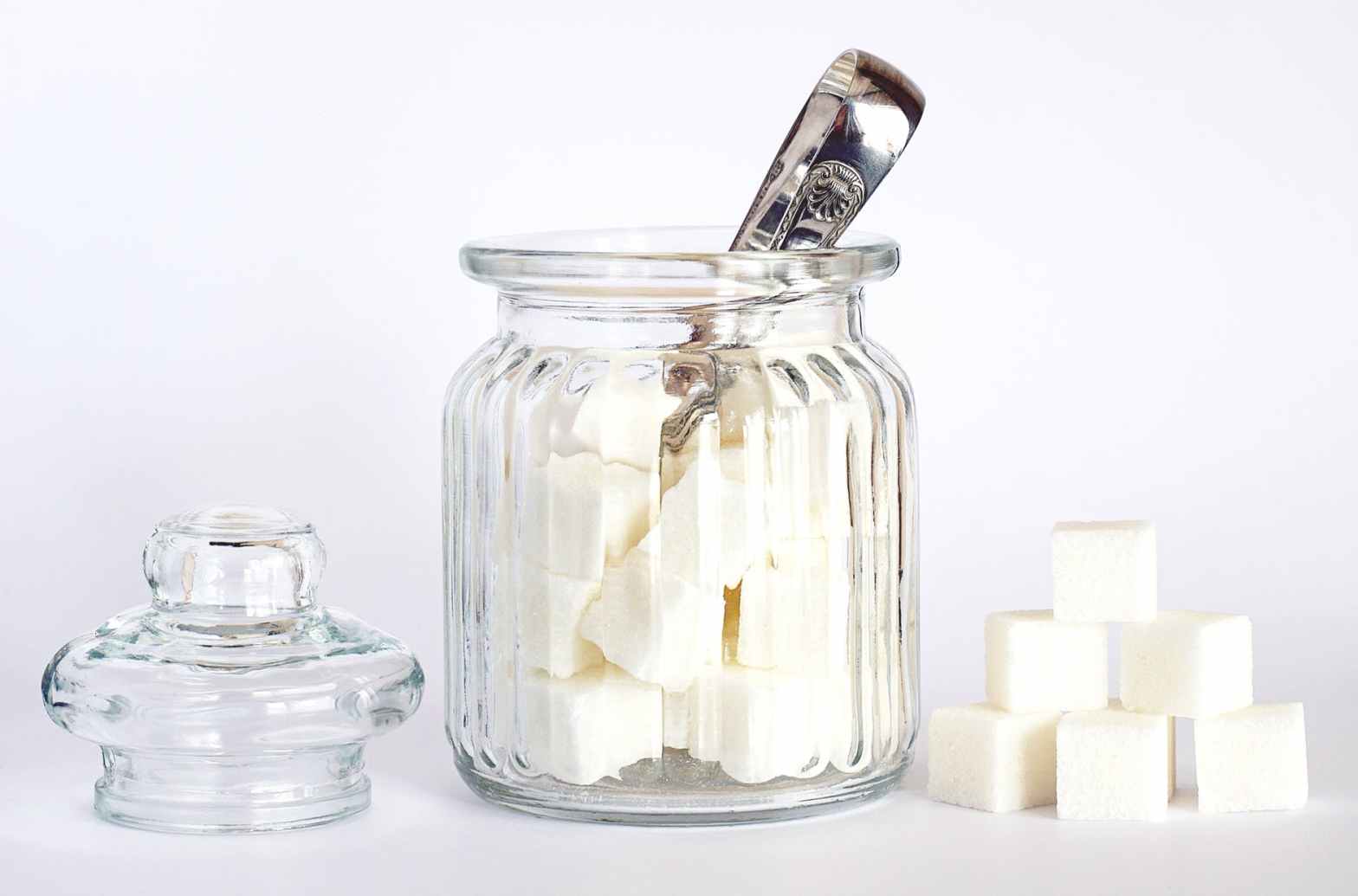
One lump or two?

Sugar, anyone? Coffee, tea, cake, or candy? Sugar is an innocuous, legal cocaine for the American consumer. Well, sort of. In all, the average American eats over 57 pounds of added sugar each year, and it’s pretty addictive. But where does it all come from? Not all of that amount is cane or beet sugar, but those are still the most available types. Have you ever thought about where that sugar you just added to your sweet tea came from, or how much that single packet cost? Probably not, which is why I’m writing this post.

Odds are, the sugar in your hot beverage was grown in the good old US of A. Sugar beets are grown across the Upper Midwest, even creeping into Washington and Oregon. Conversely, sugar cane dominates Southern states, namely Florida, although Louisiana and Texas pitch in too. But these plants don’t just grow because the sun shines; they grow because the government says so.

You read that right. With limited exception, 85% of sugar consumed in the U.S. is grown here–because Congress says so. The so-called sugar program mandates that no less than 85% of sugar sold in the U.S. be from U.S. farmers. It also hands out loans to sugar farmers, allocates allowable imports across 41 countries, and turns sugar into ethanol when the program incorrectly estimates demand. In all, a sweet deal for sugar farmers.

Not so much for everyone who buys sugar (AKA, everyone else). For them, it’s rather sour.

Indeed, the sugar program is a price control, meaning that buyers of sugar are “taxed” at the expense of producers of sugar. Some believe this “tax” runs as high as a bitter $4 billion per year. More conservative estimates peg its cost at about $1 per person per year. Two economists studying the issue didn’t sugarcoat their opinion: “the sugar program distorts trade in sugar-intensive imports.”

At this you might be marginally annoyed. Why is the government making me pay an extra three cents for my white chocolate mocha frap? But Congress has been “taxing” America’s sweet tooth since, literally, the founding. 1789! So why?

Simple: Protect domestic industry. It’s a classic retelling of the Broken Window Fallacy. We break the window (in this case, pocketbook) of the U.S. consumer and confectioner to pay the sugar farmer. It works well until you realize that the consumer might have had better things to spend that $10 per year on, like a subscription to the New York Times, or a yo-yo. Overall economic efficiency is reduced while a small segment of the population is enriched.

And this isn’t simply pitting jobs against cheap sugar, like some politicians would argue. The Department of Commerce debunked that claim in 2006. They determined that every job saved by the program killed three jobs in industries that use sugar. Think confectionery manufacturers, cake shops, etc. At this point, the program remains intact largely thanks to sugar-producer’s lobbying efforts.

Next time you buy some Chips Ahoy, or your nearest of kin complains about the price of coffee, remember to thank Uncle Sam. Without him, this post would not have been possible, and you might’ve been a litter richer. So, one lump or two?

Reforming Private Prisons

I’ve never been to prison as a criminal, but I had the opportunity to participate in a jail tour last summer as part of my job as a legal assistant. It wasn’t particularly appealing. The ceilings in the guard towers were low, the inmates were rowdy, and the building was a collection of concrete, cameras, and closed doors. Altogether, bleak.

But while I wasn’t enthusiastic about touring the jail, I think it’s fair to say that most people believe we should have them. We want people who break the law to pay for it, with either money or time. And while politicians (on both sides of the aisle) today are notorious for ignoring laws they disagree with, most citizens still support some degree of law and order.

To this end, both the federal and state governments run prisons to house those awaiting a trial or serving a sentence. Sometimes, the government contracts with a private company to hold criminals. These private prisons are a source of debate among those in the criminal justice arena.

Last weekend, the prison policy debate intruded on my life for about an hour. I was debating in Louisiana and advanced through prelims with a winning record. In the first elimination round, I was pro on a resolution abolishing private prisons. Before the round, I didn’t know much other than that lots of people didn’t like private prisons. During prep, I learned why.

First, private prisons are violent. Studies on private prisons in Idaho and Mississippi showed the assault rates were much higher than those in publicly-run prisons. A quote I wish I’d had for the debate round came from a Mississippi judge. He called the prison company there “a cesspool of unconstitutional and inhuman acts.”

The Department of Justice also found that “contract prisons incurred more safety and security incidents per capita than comparable BOP [Bureau of Prisons] institutions.” That DOJ report also stated that private prisons often put inmates in solitary confinement against protocol. These studies provided the backbone of one of my main contentions.

My second contention was that private prisons increased the recidivism rate–the rate at which criminals re-enter the justice system. One of my buddies in prep found a report that looked at quite a few states. Examinations of Oklahoma, Minnesota, and Florida all showed that inmates from private prisons were more likely to re-enter the justice system than inmates from public prisons. In Minnesota, this rate was as high as 17%.

Finally, I cited research that private prisons were no less costly than public institutions. When I found it again for this post, I learned that it was probably from 1996. Oh well… But while writing this I also confirmed those findings: A Georgia audit found that private prisons cost more per person to run than public prisons.

That was prep. I won’t focus much on the debate. One of my opponent’s arguments was more procedural than pragmatic, and one was on overcrowding. He claimed that abolishing private prisons would overcrowd public ones, and I turned that argument by saying that private prisons increased re-incarcerations. Voila. I ended up winning.

But while the debate ended there for me, it will continue for everyone else, especially for those who have to deal with its real-world implications. For all intents and purposes, private prisons might really need to be shuttered. But maybe not. Maybe reform is preferable. Either way, I think something needs to change.

Design a site like this with WordPress.com
Get started